HCM, PKD and blood groups: health tests for breeding queens and studs
11 November 2026 · 7 min read · Cats
Heart echo, DNA tests, blood groups and FeLV/FIV: an overview of the tests worth doing on a queen and a stud cat before you plan your first litter.
A queen and a stud cat entering a breeding programme pass on more than type, colour and temperament to their kittens. They also pass on genes for diseases that may show no symptoms for years. Well-planned health tests help limit that risk and, at the same time, build trust with future buyers. Below is an overview of the most important tests for breeding cats: heart echo, DNA tests, blood groups and infectious diseases.
Heart echo for HCM: why one scan is not enough
Hypertrophic cardiomyopathy (HCM) is the most commonly diagnosed heart disease in cats. It involves thickening of the left ventricular wall, which over time can lead to heart failure, thrombosis or sudden death. The disease occurs in many breeds and in non-pedigree cats as well.
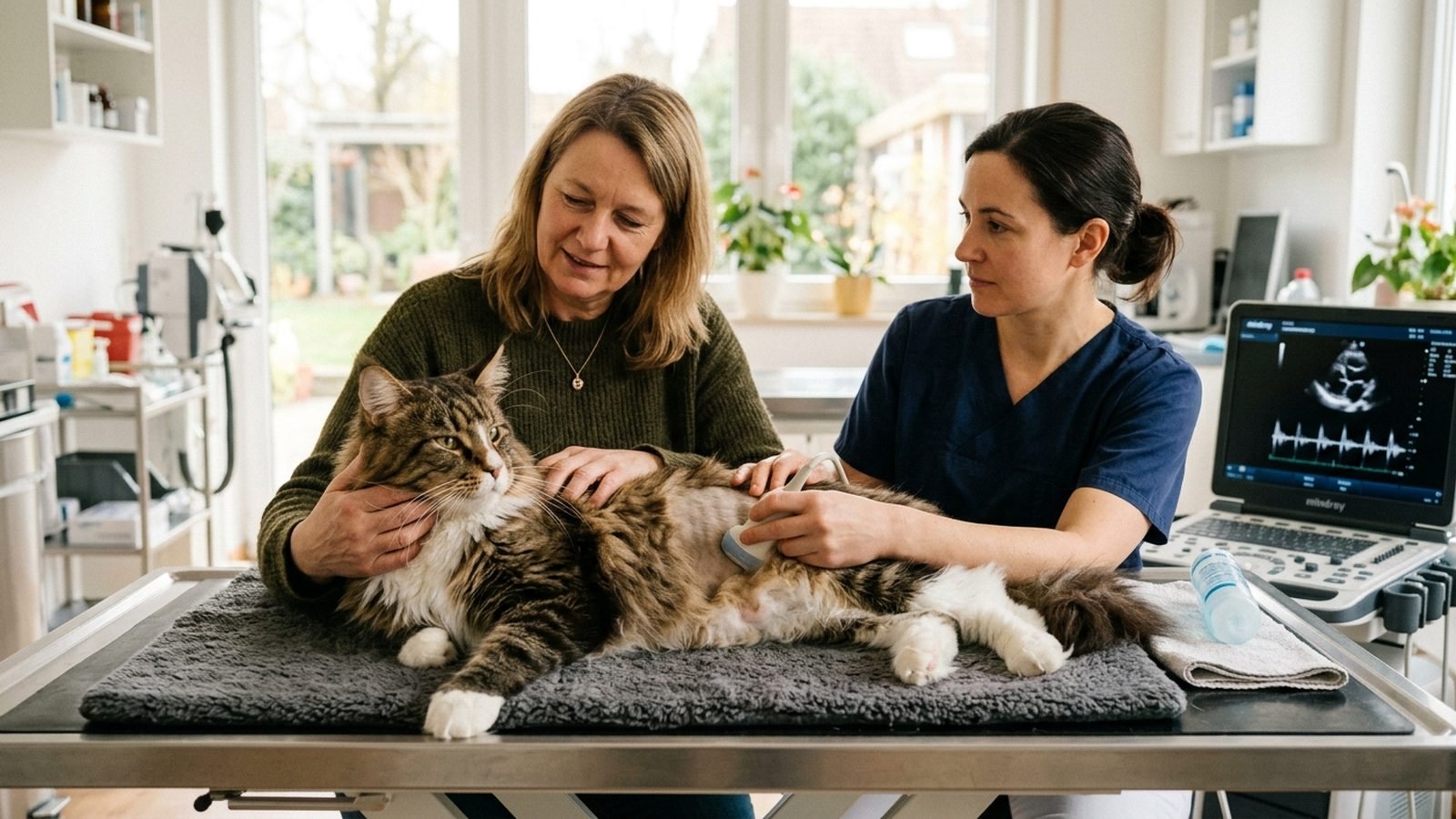
The basic screening test is echocardiography performed by a vet with experience in cardiology. The key point: HCM often develops gradually and may only appear in an adult cat, sometimes after several years. A normal result therefore only means that no changes were found on the day of the scan. That is why many breeding programmes repeat the heart echo regularly, most often about every 12 months, throughout the cat's breeding career and sometimes after it has ended, because an older cat's result says a lot about its offspring.
- Have the scan done by a vet who gives measurements and a clear assessment in the report (e.g. normal, equivocal, HCM).
- An equivocal result is a signal to recheck sooner, not a reason to panic. Decide on the cat's further use in breeding together with the cardiologist.
- Keep every report, including those from years ago. A history of results is worth more than a single scan.
DNA tests: what they detect and what they don't
Genetic tests are done once in a cat's life, usually from a cheek swab or a blood sample. They show whether the animal is clear of a given mutation, carries it, or has two copies of the altered gene. The tests most often done in breeding cats are:
- PKD1: polycystic kidney disease, inherited as an autosomal dominant trait. It mainly affects Persians, Exotics and breeds with Persians in their pedigrees (e.g. some British lines). Because one copy of the mutation is enough to cause the disease, a cat that tests positive is affected, not just a carrier.
- HCM: mutations in the MYBPC3 gene. Separate variants have been described in Maine Coons (A31P) and Ragdolls (R820W). Each test covers only a specific mutation in a specific breed.
- PK-def: pyruvate kinase deficiency, which leads to haemolytic anaemia. Tested in Abyssinians, Somalis, Bengals and several other breeds, among others.
- SMA: spinal muscular atrophy described in Maine Coons, inherited recessively.
- Depending on the breed, also tests for progressive retinal atrophy (PRA), glycogen storage disease type IV (in Norwegian Forest Cats) or other diseases recommended by the breed club.
A negative HCM DNA test does not replace a heart echo. The test detects only one known mutation, and cardiomyopathy can have other genetic causes too.
A carrier of a recessive disease does not have to be excluded from breeding. Mating it to a partner that is clear of the mutation will not produce affected kittens, although some of them will be carriers. Such decisions do need a well-thought-out plan, so that the frequency of the mutation in the line does not rise over the following generations.
Blood groups A, B and AB and neonatal isoerythrolysis
Cats have blood groups A, B and the rare AB. Group A dominates in the general population, but in some breeds, such as British Shorthairs, Devon Rex, Cornish Rex and Birmans, group B is noticeably more common.
Cats with group B naturally have strong antibodies against group A red blood cells. If a group B queen is mated with a group A (or AB) tom, some of the kittens may be group A. After drinking their mother's colostrum, the antibodies destroy their red blood cells. This is neonatal isoerythrolysis. Signs usually appear in the first days of life: weakness, refusal to suckle, dark urine, jaundice and, in severe cases, the death of the kitten.
| Queen | Tom | Risk of isoerythrolysis |
|---|---|---|
| A | A, B or AB | practically none |
| B | B | none |
| B | A or AB | yes, for kittens with group A or AB |
Blood group can be determined with a serological test, and a DNA test will also show whether a group A cat carries the B allele. This matters for planning: two group A parents that both carry B can produce group B kittens. If you are planning an incompatible mating, discuss with your vet what to do after the birth. Usually this means keeping the kittens away from their mother's colostrum for a time and giving them another source of food.
FeLV and FIV: testing before mating
Feline leukaemia virus (FeLV) and feline immunodeficiency virus (FIV) are viral diseases that can spread between cats, and FeLV can also pass from mother to kittens. Responsible catteries routinely test both animals before mating, especially when the stud comes from another cattery or the queen travels to an outside stud. Many catteries require the result to be no more than a few months old, so agree this with the other side before the mating date.
Rapid in-clinic tests are convenient, but a positive or inconclusive result usually needs to be confirmed by another test. Leave the interpretation to your vet. Besides FeLV and FIV, make sure both cats are up to date with vaccinations, worming and external parasite control.
Recommendations depend on the breed
There is no single list of tests that applies to every cat. A Maine Coon breeder has different priorities from a Persian breeder, and an Abyssinian breeder different ones again. For example:
- Maine Coon: heart echo repeated regularly, DNA for HCM (MYBPC3), SMA, PK-def; in many programmes also hip assessment (X-ray).
- Ragdoll: heart echo, DNA for HCM (the Ragdoll variant).
- Persian and Exotic: PKD1 (DNA or kidney ultrasound), heart echo, blood groups.
- British Shorthair: blood groups (high proportion of group B), PKD1, heart echo.
- Abyssinian and Somali: PK-def, PRA, blood groups.
Treat this list as a starting point. Current recommendations are published by breed clubs and cat registries, and the requirements of FIFe, WCF and individual clubs can differ and change. Before planning a litter, check the rules that apply in your organisation.
Paperwork: how to keep test results
A test result is only worth something if it can be clearly linked to the cat. That is why, when a sample is taken and at the heart echo, the vet should confirm the animal's identity from its microchip and write the number on the document. Make sure that:
- every result includes the cat's registered pedigree name, identification number, date and the name of the laboratory or vet;
- originals or scans are kept in one place, together with the pedigree;
- results are shared with future buyers and stud owners, but the microchip number is not published in adverts or on your cattery website; the name of the test, the result and the date are enough.
Frequently asked questions
At what age should a breeding cat have its first heart echo?
The first scan is usually done before the cat starts breeding, most often around one year of age, and then repeated regularly. Agree the exact schedule with a veterinary cardiologist and follow your breed club's recommendations.
Can a cat with a DNA "carrier" result be bred from?
For recessive diseases, often yes, provided the partner is clear of the same mutation. The exception is dominant diseases such as PKD1, where a positive result means the cat is affected. Make the final decision knowing your organisation's rules and the risk to the line.
Does blood group matter if both cats are healthy?
Yes. A healthy group B queen mated with a group A tom can give birth to kittens at risk of isoerythrolysis. Determining blood groups before mating lets you prepare for this together with your vet.
In BreedManager you can record test results for each cat using the health test dictionary and set a reminder for the next heart echo or the FeLV/FIV test before mating. The results are at hand when you plan pairings, and when the litter arrives you can publish the kittens in the BreedManager listings.
Pedigrees, COI, matings, litters with weights, health tests with reminders — for dogs and cats. Free during the beta.
Start free See the breeding software features